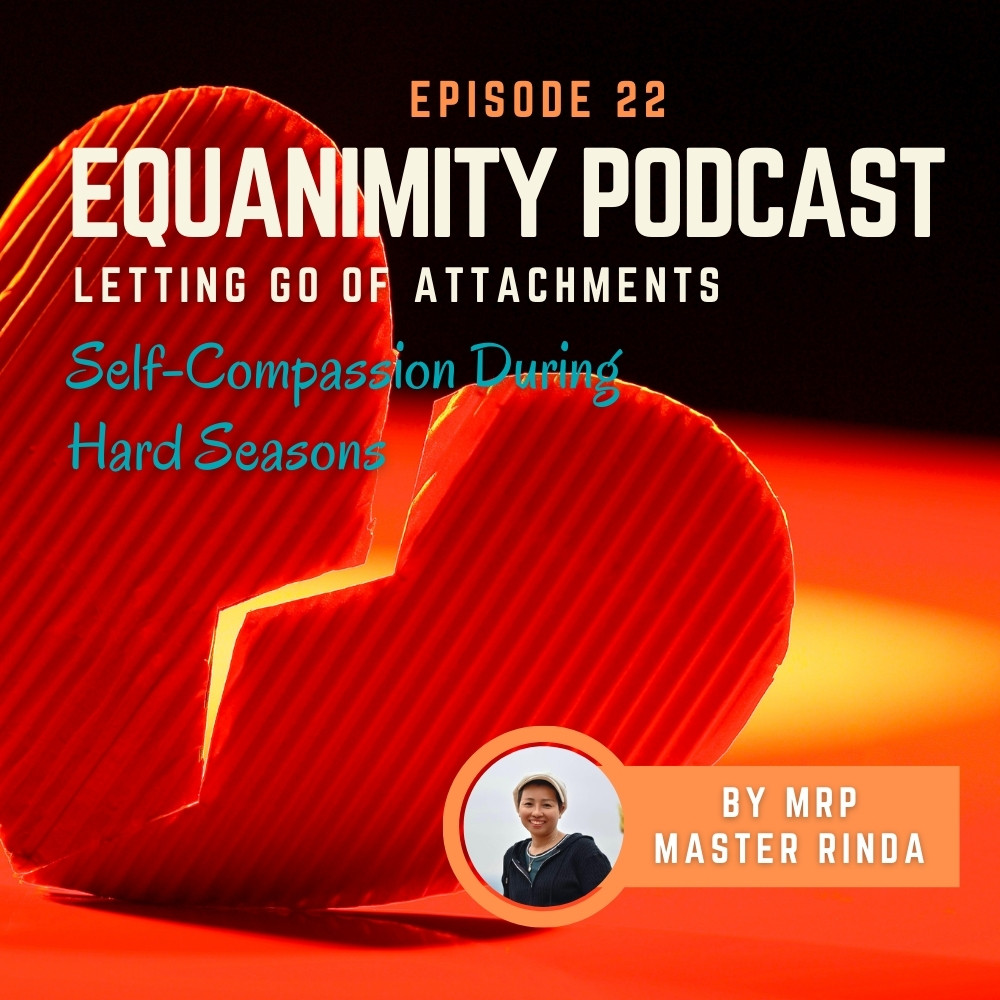
"Welcome back to Equanimity: Letting Go of Attachments. I'm your host, Master Rinda."
In the hardest seasons of my life—illness, motherhood, identity shifts, and moments when I felt lost—self-compassion was the one thing that helped me stay afloat. It didn't solve everything, but it softened the pain enough for me to keep going.
Today, we'll gently explore what it means to practice self-compassion during hard seasons, and how equanimity can help you meet yourself with kindness instead of criticism.
I'm grateful you're here. This is a space to breathe, soften, and remember your own humanity.
When life becomes heavy, many people turn against themselves. They blame themselves for struggling. They judge themselves for feeling overwhelmed. They think they should be stronger, faster, more put together.
But self-judgment does not create strength. It creates shame.
Equanimity teaches us to replace judgment with care—to meet suffering with presence, not pressure.
Self-compassion is not self-pity. It is not weakness. It is not an excuse.
Self-compassion is the courage to say: "I am doing my best." "I deserve understanding." "I am allowed to struggle."
Supporting yourself through hardship means listening to your emotions instead of suppressing them. It means offering yourself the same kindness you would offer a friend. It means acknowledging your limits without blaming yourself for having them.
Cultivating inner kindness strengthens your resilience. When you stop attacking yourself, your system relaxes. Your clarity returns. Your energy slowly resets.
Resilience is not about being tough—it is about staying gentle with yourself while you're hurting.
Hard seasons eventually shift. But how you treat yourself during those seasons becomes part of your healing.
If you've been moving through difficulty, take a gentle breath. You do not need to carry everything alone. You do not need to have the answers. You only need to stay present with yourself.
Thank you for sharing this time with me.
If this episode brought you comfort, I invite you to follow the podcast.
I'd love to hear from you: what is one way you can offer yourself kindness today?
For more guidance, reflection, and support, please visit rinda.one
Until next time, be gentle with your heart. It is doing the best it can.